Countertop and Backsplash Questions From Scottsdale Kitchens
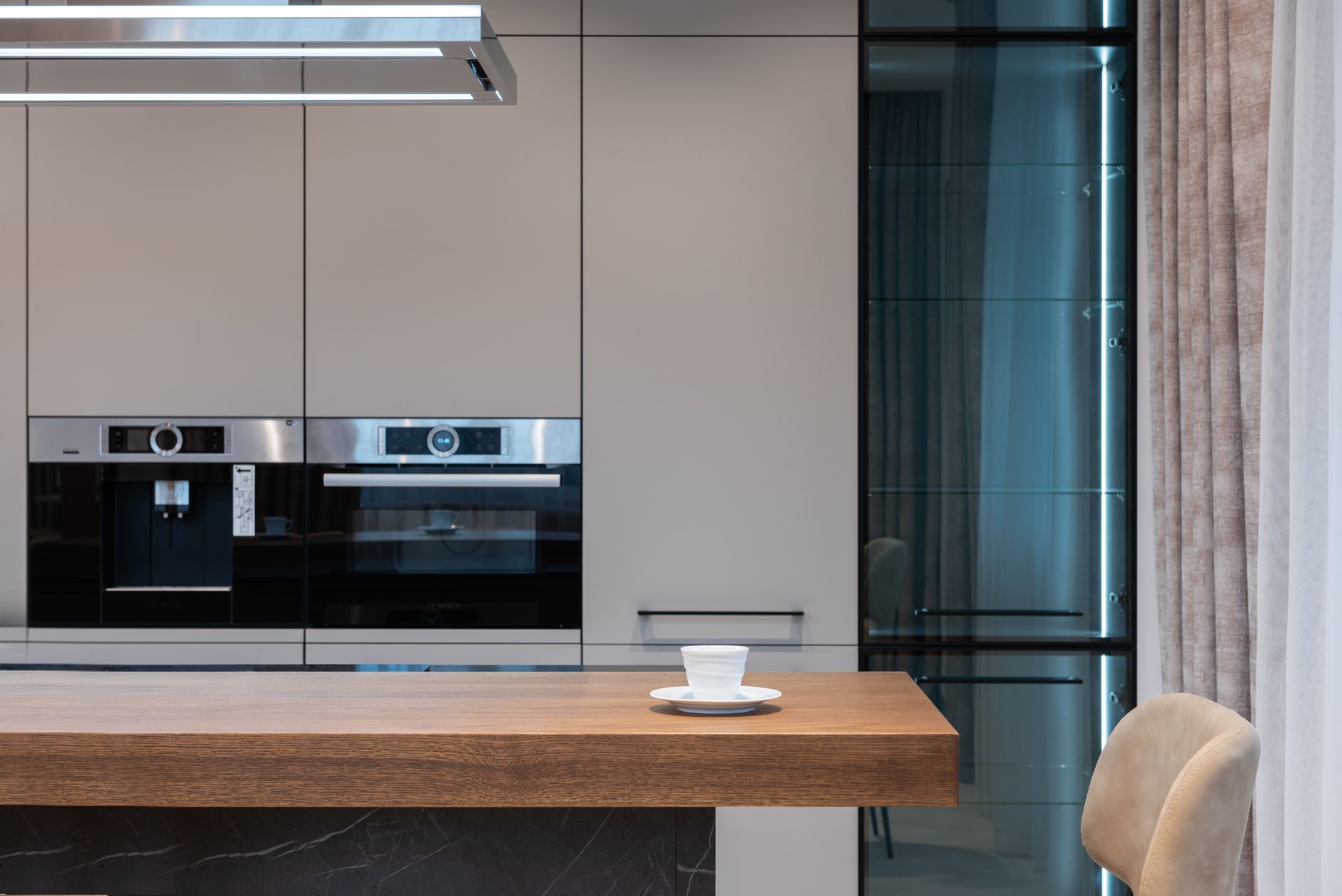
Countertops and backsplash are the two surfaces everyone sees and touches, and they generate more questions than any other part of a kitchen. The answers below come from the way these materials behave in real Scottsdale kitchens, where dry heat, hard water and strong sun change a few of the usual rules.
Which countertop material holds up best in a hot, dry climate?
There is no single winner, because each stone and manufactured surface fails in its own way. Granite and quartzite handle heat from a pan and shrug off the sun on a sunny windowsill. Engineered quartz is made from ground stone bound with resin, and the resin is the weak spot: a hot pan set straight on it can leave a mark, and direct sun through a west window over many summers can yellow some light colors. Solid surface and laminate give in to heat even faster. Marble and some limestone are softer, so acidic spills etch the surface and dull the shine.
For a kitchen with a big west-facing window or an outdoor kitchen that bakes in July, granite, quartzite or a porcelain slab are the safer picks. For a kitchen that lives indoors in air conditioning all year, engineered quartz is a fine choice as long as everyone uses trivets.
Does hard water matter for countertops and faucets?
Water across the Phoenix metropolitan area carries a lot of dissolved minerals. Drops left to dry on a dark countertop leave white rings, and the buildup around a faucet base turns into a crust. A sealed natural stone resists it for a while, but any surface needs a wipe-down habit. Honed and matte finishes hide the rings better than a high gloss, which shows every dried drop. A sink with a deep rim and a faucet with a smooth base are easier to keep clean than ornate fixtures with crevices.
How often does natural stone need sealing?
Sealing frequency depends on the stone, not the calendar. Dense granite may go years between coats. A lighter, more porous stone may need attention every year. The test is simple: put a few drops of water on the surface and wait fifteen minutes. If the stone darkens, the water is getting in and it is time to reseal. Engineered quartz and porcelain do not need sealing at all, which is a large part of their appeal.
What edge profile works for a busy kitchen?
Sharp square edges look crisp and chip easily at corners, especially on an island where kids bang chairs and stools. A slightly eased or rounded edge resists chipping and is gentler on hips and forearms. Very ornate profiles collect grease and are hard to wipe clean. Thick laminated edges, where two layers of slab are glued together to look thicker, add visual weight but require a skilled fabricator to hide the seam.
- Eased edge: a barely softened corner, the most chip resistant and the simplest to clean.
- Bullnose: fully rounded, forgiving for seating at an island.
- Mitered edge: two pieces joined at an angle for a thick, waterfall look, with the seam showing under close inspection.
- Ogee and other decorative profiles: more labour to cut and more places for grease to sit.
Where do seams go, and can they be hidden?
Every long run needs a seam somewhere, because slabs have a finite length. A good fabricator puts the seam where the stone is supported and away from the sink cutout, where the stone is weakest. A seam next to a dishwasher or across the front of a cooktop is a bad spot. Matching the pattern and color across the seam is easier on a plain material than on a veined one. Ask to see the slabs before cutting and agree where the seam falls on a paper layout.
A seam on a straight run is nearly invisible with the right color-matched adhesive. A seam at an inside corner is the cleaner choice, because the corner makes the line less noticeable than it would be across the middle of a straight stretch.
How high should the backsplash go?
The standard height is four inches, which protects the wall from splashes. A full-height backsplash that climbs to the bottom of the upper cabinets or to the ceiling behind a range gives the wall protection from grease and makes cleaning easier. It also removes the awkward line where paint meets the thin strip of stone. Behind a range, the surface has to be non-combustible and tolerate heat, so painted drywall alone is not a good choice there.
What tile choices suit a Scottsdale kitchen?
Ceramic and porcelain tile handle heat and water well. Glass tile reflects light and brightens a kitchen, though it shows grout haze and smudges. Natural stone tile is porous and needs sealing, grout included. Large format tile has fewer grout lines to clean, and a small mosaic has many, which is nice to look at and a chore to scrub.
Grout is the part that fails first. Cement grout stains and needs sealing. Epoxy grout resists stains and moisture but sets fast and is harder to install, so the tile setter needs to know the product. Grout color is a design decision with a practical side: a mid-tone grout hides the splatter that a white one shows after a week of cooking.
In a house with a strong desert-modern style, like the clean horizontal lines made popular by the architecture at Taliesin West, a plain stacked tile in a matte finish suits the room and stays out of the way of the stone. In a more traditional kitchen, a subway layout in a satin glaze fits wood cabinets and does not compete with a patterned countertop.
Can the countertop and backsplash be installed in either order?
The countertop always goes first. The fabricator makes a template once the base cabinets are set and level, cuts the stone, and installs it. Then the backsplash goes up, because tile needs a clean, straight reference line at the counter. Plumbing hookups for the sink and cooktop come after the stone. Plan on a gap of some days between template and installation while the stone is cut, and avoid ordering backsplash tile until the counter height and the outlet positions are final.
Electrical outlets that sit in the backsplash have to be set at the right depth. Tile adds thickness, and a receptacle flush with bare drywall ends up recessed behind the tile. The electrician uses box extenders, or the outlets are moved once the tile is on. Switch plates in a tiled area look best when the tile is cut around them and a plate matches the grout or the tile color.
What is the one thing to decide first?
Choose the countertop before the backsplash, and look at both in the room, in the real light, at the time of day the kitchen is used most. A sample held up under a showroom lamp lies about color, and the light through a west window in the Sonoran Desert tells the truth. A kitchen that looks right at noon and at dusk is a kitchen that will look right for years.